
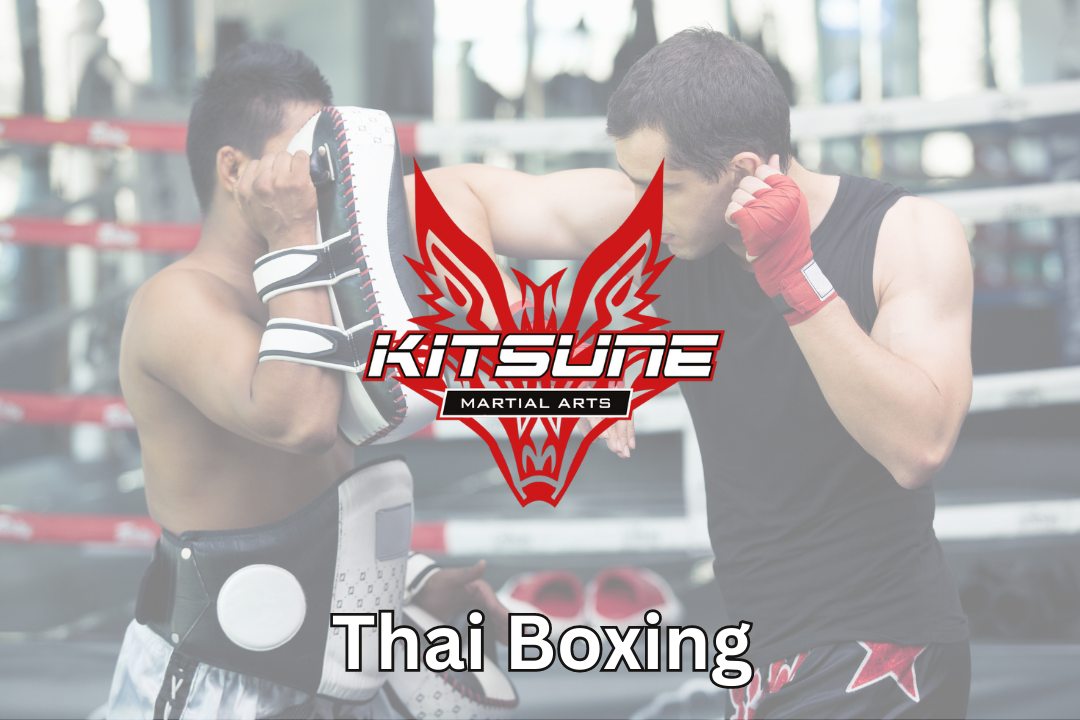
The difference is who or what presents the target
In simple terms, pad work uses a target held by another person, while bag work uses a training bag as the target. Both give a beginner a defined place to direct a technique or combination. Neither term, on its own, means sparring.
Kitsune Thai Boxing is the adult Muay Thai route. Its current public page lists pad work, bag work, technique development, partner drills and controlled sparring where appropriate. It does not say that every activity happens in every class, publish a fixed first-session order or explain who holds the pads. Ask about the session you may actually attend rather than treating the list as a timetable.
What happens during pad work?
One person presents one or more padded targets and the striker follows an explained task. That task might be one technique, a short sequence or a response to a cue. The pad holder is part of the exercise: target position, timing and instructions affect what the striker is practising.
The International Federation of Muaythai Associations’ Lor Pao rules define its formal pad-work discipline as athletes performing striking combinations on pads held by a coach. That formal competition format is useful context for understanding the two roles, but it is not evidence of how Kitsune organises an ordinary beginner class.
Before starting, make sure you know:
- who is holding and who is striking;
- the exact technique or sequence;
- the expected pace and power;
- the signal to begin, pause and change roles; and
- where the pad should be presented.
If another student will hold for you, ask for the holding instruction as carefully as the striking instruction. Do not guess the target position or try to match an experienced pair’s speed.
What happens during bag work?
Bag work directs the task at training equipment rather than pads held by another person. That removes the pad-holder role, but it does not make the exercise unstructured. A coach may still specify the technique, sequence, duration, foot position, pace or rest period.
For a new student, the useful question is “What am I practising in this round?” rather than “How hard should I hit?” IFMA’s current Muaythai technique overview describes the sport’s technical focus in terms of timing, precision and effective execution, as well as strikes, defence and clinch control. A beginner bag drill may address only one small part of that wider skill set.
Ask the coach to show the starting position and intended movement before adding speed. If the bag moves in a way you do not understand, stop and ask how to reset or continue instead of improvising around it.
Pad work, bag work and partner drills can overlap
A pad drill may also be partner work if two students take turns holding and striking. Bag work usually removes that paired role. Sparring is a separate question because its target, choices and contact need their own explanation.
The labels do not tell you the whole level of difficulty. A simple pad sequence can give a beginner a clear cue; a longer bag combination can demand more memory and coordination. Equally, “beginner” does not verify one pace, intensity or amount of individual coaching at Kitsune. Ask what the current class expects.
If your concern is contact with another student, use the separate guide to beginner partner drills and personal boundaries. If you are still choosing the broader adult route, compare Thai Boxing with Adult Kickboxing. Those guides answer different questions from this equipment-focused explanation.
Check the equipment instructions before you begin
Current UK Coaching guidance on safe surfaces and equipment recommends that coaches inspect equipment and demonstrate the safe, appropriate use of items such as punch pads and focus mitts. It also advises considering the planned activity, space, equipment and individual participants. This is general coaching guidance, not confirmation of Kitsune’s operating policy.
As a participant, ask for the practical instruction you need:
- What equipment will this drill use?
- Has the coach shown both the striker’s and holder’s role?
- What pace and power are expected?
- What should you do if the target position or bag movement feels unclear?
- Who should you tell if equipment feels damaged or unsuitable?
Kitsune’s public pages do not publish a Thai Boxing kit list, equipment-loan policy or glove requirement for the free week. Confirm what to wear and bring before buying specialist equipment.
Use the free week to judge how clearly each drill is taught
During the trial, focus on whether the class gives you a workable learning process:
- Is the purpose of the drill explained before the round starts?
- Can you identify the target and sequence without copying blindly?
- If you hold pads, are you shown how to do that role?
- Can you ask for the pace or instruction to be repeated?
- Do you know when to stop and change roles?
You are not trying to prove how hard you can hit. You are deciding whether the technical coaching, equipment work and class format make sense for you as a beginner.
Confirm the current Worcestershire class
Kitsune’s primary academy is Paddington House, New Road, Kidderminster, DY10 1AL, and the site lists other Worcestershire locations. It does not publish which venue currently runs adult Thai Boxing, at what time or with what availability. The Kitsune FAQ explains the general first step, but the team must confirm the live class details.
When you are ready, request your free week and say that you are new to Thai Boxing. Ask whether the current beginner session uses pads, bags or paired holding, and what equipment you should bring. That gives you a clearer first visit without pretending that one written class list is a fixed lesson plan.