
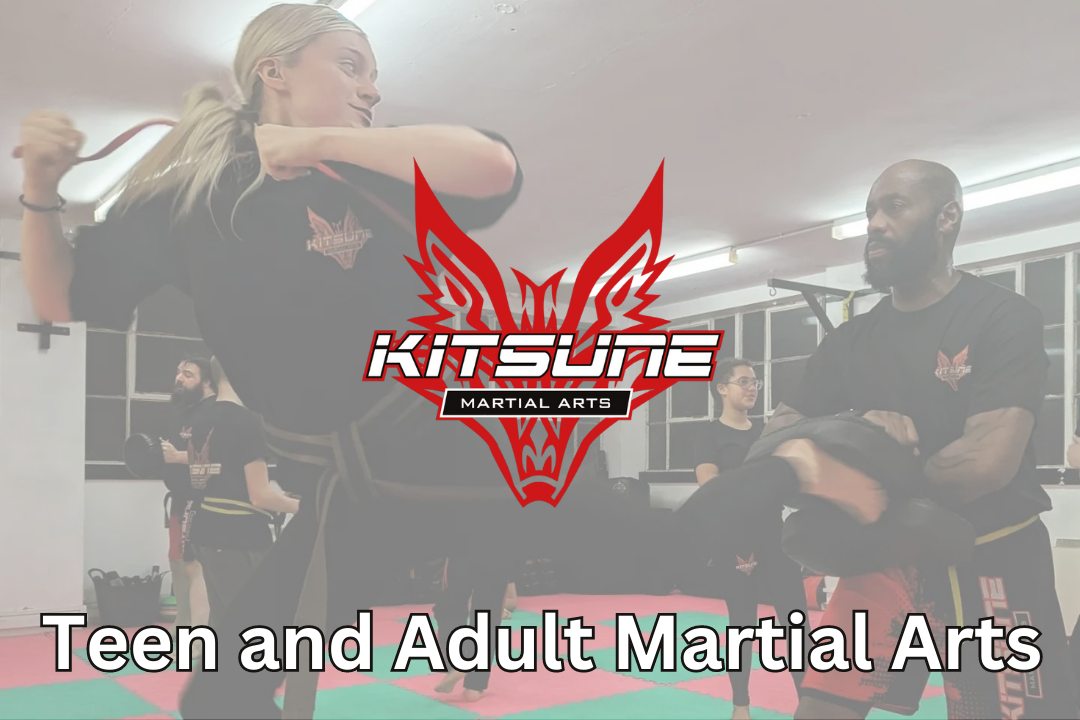
Start with the purpose, not the label
In Kitsune Adult Kickboxing, practical self-defence is one published part of a broader programme that also includes kickboxing and boxing skills, partner drills, fitness and technique work. The phrase tells you that self-defence is included; it does not identify a fixed technique list, scenario, contact level or beginner sequence.
For a new student, the most useful first question is: “What is this exercise meant to help me understand or practise?” A clear answer should describe the aim of the drill and what each person will do. It should not depend on a promise that one movement works for everyone or guarantees an outcome outside class.
“Practical” should still be specific
Different schools can use “self-defence” to describe very different material. A class might discuss decisions, movement, positioning, boundaries or a physical response; it might use an individual exercise, equipment or a partner. These are examples of questions to clarify, not a description of Kitsune’s unpublished syllabus.
Before joining an activity, ask the coach to explain:
- What situation or problem is the drill representing?
- What is the beginner expected to notice, decide or practise?
- What is the other person’s role, if there is a partner?
- Where can contact happen, and what contact is outside the task?
- How are pace, power or resistance limited?
- Which word or signal pauses the exercise immediately?
If “practical” remains vague after that explanation, ask for the exercise to be demonstrated at beginner pace. You should not need to copy an experienced pair and guess which parts matter.
Separate self-defence drills, partner drills and sparring
The same class can contain several forms of practice, but they answer different questions.
- A self-defence drill should have a stated situation and learning purpose.
- A partner drill means two people have defined roles in an exercise.
- Sparring is less scripted practice and needs its own explanation of purpose, contact, pace and readiness.
A self-defence exercise can involve a partner without becoming sparring. Equally, the words “partner drill” do not tell you whether the task is self-defence, technique practice or something else. The separate guide to beginner kickboxing partner drills explains how to ask about contact and communicate a boundary before paired work.
Kitsune’s public Adult Kickboxing page does not publish one rule covering every exercise. Ask which kind of practice the current activity is and how a complete beginner takes part.
Ask how the drill is made suitable for a beginner
A useful beginner explanation should cover the starting position, task, pace, contact, equipment and stopping rule before intensity is added. Current UK Coaching safe-practice guidance says activities should match participants’ skill and that people need appropriate instruction, supervision and information about risk and equipment.
That is general coaching guidance, not proof of Kitsune’s current procedure. Use it to shape practical questions:
- Will the drill be practised alone, with equipment or with a partner?
- Is the sequence cooperative, lightly resisted or structured another way?
- What should you do if the exercise changes from the explanation?
- Can you watch a demonstration or ask to repeat the first stage?
- Who should you speak to if contact, pace or a position feels unclear?
The UK Coaching Code of Practice also centres clear services, participant decisions and appropriate physical contact. If you do not understand or consent to the task as explained, pause and speak to the coach before continuing. Ask what is possible in that session rather than assuming a guaranteed substitute activity.
Treat real-world claims carefully
Class practice happens with an agreed task, known space, coaching and stopping rules. A real incident is not controlled in the same way. That difference does not make practice meaningless, but it does mean a responsible explanation should name the limits of the drill.
Ask the coach:
- Which part of the exercise is a class learning tool rather than a prediction of a real event?
- What assumptions does the drill make about distance, space, another person or the moment it begins?
- How should a beginner judge progress without treating speed or force as proof?
- Is the explanation about martial arts practice, personal safety, or legal responsibilities—and where should you seek specialist advice instead?
This article does not teach a physical response or give legal advice. Its job is to help you distinguish a clearly explained class exercise from a broad promise.
Use the free week to judge the explanation
During the free week, do not ask whether you looked convincing. Ask whether the learning process was clear:
- Did you understand the purpose before the drill began?
- Were both roles and the stopping signal explained?
- Did the pace and task match your starting experience?
- Could you ask a question or pause without guessing what to do?
- Did the coach explain what the exercise could and could not demonstrate?
If fitness is your main concern, use the separate guide to starting kickboxing from your current level. If you are deciding between the broader Adult Kickboxing curriculum and specialist Muay Thai, compare Thai Boxing with kickboxing. This guide has a narrower purpose: understanding the published self-defence element before you take part.
Confirm the current Kidderminster class
Kitsune’s verified Kidderminster base is Paddington House, New Road, DY10 1AL. The public site does not publish a current Adult Kickboxing timetable, live availability, self-defence syllabus, kit list or the content of a particular first session. The Kitsune FAQ explains the general free-week process, but the team must confirm the session that applies to you.
When you are ready, request your free week and say that you are interested in Adult Kickboxing in Kidderminster. Add one precise question: what does practical self-defence mean in the current beginner class, and how will the first relevant drill be explained?