
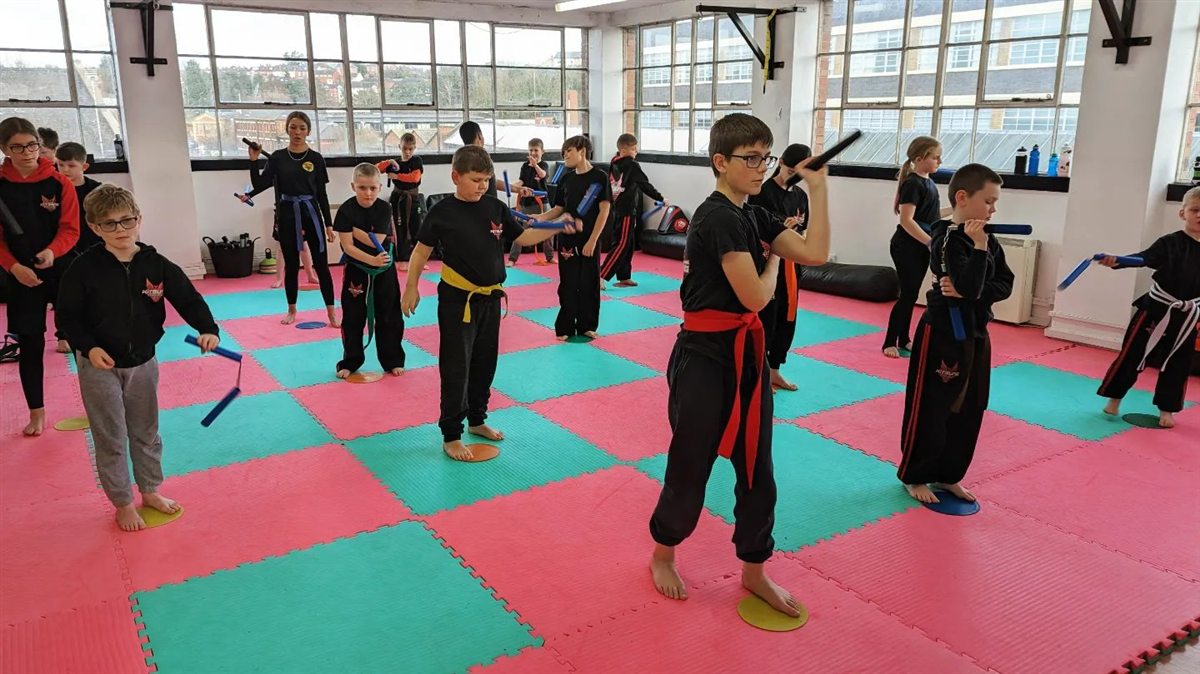
The learning focus is broader than a list of techniques
Kitsune Cubs is the published introductory programme for children aged 4–7. Its current description names eight areas: balance, coordination, motor skills, concentration, teamwork, courtesy, respect and focus.
That list explains the programme’s learning focus. It does not publish a fixed lesson plan, say that every area appears in every class or guarantee that a child will achieve a particular result. A useful parent question is therefore not “Which skill will my child master this week?” but “What was the activity asking them to practise?”
What do balance, coordination and motor skills mean here?
These three terms are related, but they are not identical.
- Balance concerns controlling body position while still or moving.
- Coordination concerns organising more than one movement together.
- Motor skills are the movement actions a child is learning to control and repeat.
In a children’s activity, you might notice moments such as starting and stopping on a cue, changing direction, holding a position, placing feet deliberately or combining a step with an arm movement. Those are examples of what a parent can observe, not a claim that Kitsune uses a particular exercise or that one class will improve a measured ability.
Current UK Chief Medical Officers’ guidance recommends varied types and intensities of activity across the week for children aged 5–18 to develop movement skills. For children who are still four, NHS under-five guidance likewise emphasises varied movement and active play. These are general activity principles, not evidence that one martial arts programme produces a guaranteed health or development outcome.
Concentration and focus are things to practise, not entry tests
For a young beginner, concentration does not mean standing perfectly still or remembering every instruction first time. A more realistic learning moment may be watching a short demonstration, responding to one cue, returning attention after a distraction or remembering the next part of a simple task.
The published programme focus tells you that concentration and focus matter within Kitsune Cubs; it does not set a pass mark. If you are deciding whether a four-year-old is ready to try a group activity, the separate guide on four-year-old martial arts readiness addresses that decision directly. This article has a different purpose: helping you understand what the programme says children work on once they take part.
Teamwork, courtesy and respect need visible context
Words such as teamwork and respect can become vague promises unless you connect them to the class experience. During the free week, notice whether your child can understand how to share the training space, take a turn, respond to an instruction, work near other children and recognise when someone else is having their turn.
Ask the team how a current activity supports cooperation or courtesy instead of assuming that participation automatically changes behaviour elsewhere. A martial arts class cannot honestly guarantee conduct at home or school, and this article does not make that claim.
Sport England’s current physical literacy guidance describes a child’s relationship with movement through how they move, think, feel and connect. That wider view is useful for parents: learning is not only whether a child copies a movement correctly, but also how meaningful and manageable the experience feels. It still does not prove an individual outcome from one programme.
Ask about the purpose, not just the performance
After class, replace “Were you good at it?” with one neutral question:
- What movement did you try today?
- Which instruction was easiest to remember?
- What did you have to try more than once?
- When did you work near or with someone else?
- Which part would you like to understand better next time?
Your child may remember a game, a movement, another child or nothing specific at first. That does not provide a complete assessment. If you need clarity, ask the coaching team what the activity was designed to practise and what a beginner should gradually become familiar with.
Use the free week to look for a learning process
Across more than one visit, look for a process rather than a promised transformation:
- Is the activity explained in a way your child can begin to understand?
- Can they try, make a mistake and try again without the visit becoming a performance test?
- Do they get chances to move, listen and take part around other children?
- Can they tell you one thing they attempted or would like to repeat?
- Do they remain interested enough to return and continue learning?
The answers may vary from day to day. The free week is useful because it lets your family observe the real coaching and routine before making a longer decision. The Kitsune FAQ explains the general enquiry process; current class times, availability, viewing and equipment arrangements must still be confirmed by the team.
Confirm the current Kidderminster starting point
Kitsune’s verified Kidderminster base is Paddington House, New Road, DY10 1AL. The public site does not publish a programme-by-venue timetable or promise that a particular Cubs session has space, so ask the team to confirm the current option before travelling.
If your child is seven, read the separate guide comparing Kitsune Cubs with Kitsune Kids rather than assuming a birthday automatically decides the class.
When you are ready, request your free week and say that you are enquiring about Kitsune Cubs for a child aged 4–7 in Kidderminster. Ask which learning areas a new child is likely to encounter in the current session, then use the week to see how the published focus appears in the real class.