
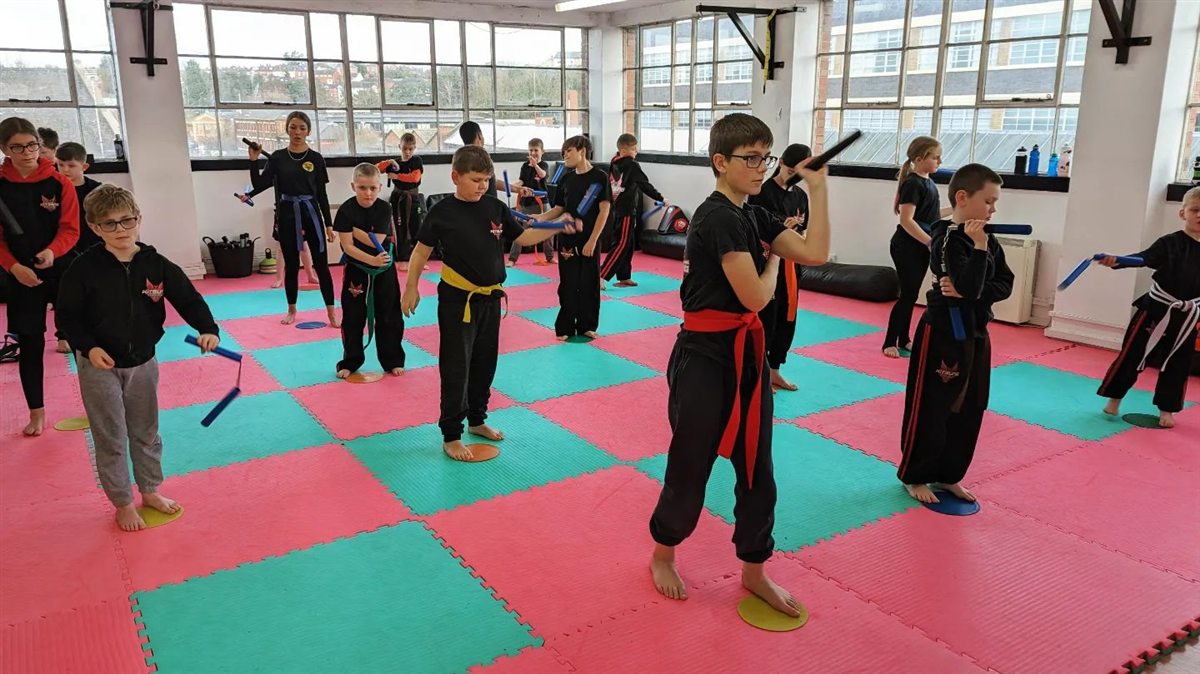
Grappling is one part of the wider Kitsune Kids mix
In plain language, grappling is close-range partner practice concerned with balance, position and control rather than striking. The exact activity can vary widely, so the word does not tell a parent whether a beginner will start standing, on the floor, holding a position or working towards another defined task.
Kitsune Kids is the published broad martial arts route for children aged 7–12. Its curriculum blends kickboxing, boxing, grappling and practical self-defence. That confirms grappling is part of the mix; it does not publish a list of techniques, a fixed lesson plan, a first-class sequence or one contact level for every child.
The useful question is therefore not simply “Does the class include grappling?” It is “What does the current beginner activity ask my child and their partner to do?”
The sport-wide meaning is context, not a Kitsune lesson plan
The official United World Wrestling grappling rules describe a formal competition style involving close fighting, takedowns and ground control, as well as techniques that belong in a regulated competitive setting. This helps show how broad the word can be. It does not show what Kitsune teaches to a child, which techniques are included or whether any competition-style activity appears in a beginner class.
Do not import a technique list from wrestling, Brazilian jiu-jitsu, mixed martial arts or another local club. Kitsune’s public page supports only the broader curriculum description. Ask the coaching team to explain the actual age-appropriate task before your child takes part.
Ask what each partner is trying to learn
A useful explanation should make both roles clear. Before or during the free week, ask:
- Does the activity begin standing, kneeling, seated or in another position?
- What is each child trying to practise: balance, movement, position, control or something else?
- Is the task cooperative, lightly resisted or structured in another way?
- Where is contact expected, and what contact is not part of the exercise?
- How are partners chosen for a new child?
- What word or signal stops the activity immediately?
These are questions, not claims about Kitsune’s current method. The public programme information does not state how children are paired, which grappling activities are used, how resistance is introduced, what clothing is required or whether specialist equipment is supplied.
If an answer uses another unfamiliar term, ask for a demonstration or a simpler explanation. A parent should not need to infer the contact rules from an experienced pair moving more quickly.
Contact and consent need a practical explanation
Grappling involves working close to another person, so a child needs to know the task, the permitted contact and how to stop. The current UK Coaching Code of Practice says physical contact should be appropriate and necessary, follow the relevant guidelines and have the participant’s full consent and approval. It also says participants should be involved in decisions about their participation.
That is general coaching guidance, not proof of Kitsune’s operating policy. Use it to shape direct questions:
- What is the coach’s stop instruction?
- Can my child ask for the task to be explained again before contact begins?
- Who should they speak to if a position feels uncomfortable or confusing?
- What should a parent do if the activity differs from the explanation?
Sport England’s current advice for parents and carers also recommends checking a provider’s safeguarding policy, welfare contact, complaints process, codes of conduct and consent arrangements. Kitsune’s public pages do not verify those operational details, so request the current information directly rather than assuming it.
Help your child describe the real activity
Before class, avoid promising that grappling will be non-contact, easy or limited to one position. Instead, tell your child that the team should explain the activity and that they can ask when they do not understand their role.
Afterwards, try questions that produce useful detail:
- What was the starting position?
- What were you and your partner each trying to do?
- How did you know when to begin and stop?
- Did the coach explain what to do if you felt stuck?
- Is there anything you want me to ask before the next class?
The answers help you assess the explanation and your child’s experience without turning one session into a performance test. They also avoid claiming that a particular movement or contact level will appear every week.
Keep this separate from choosing between two programmes
This guide explains one component of Kitsune Kids. It does not repeat the broader decision between Kitsune’s two published routes for ages 7–12.
If your child wants a mix of striking, grappling and self-defence, the wider Kids curriculum may be the more relevant starting point. If they are mainly interested in the published pad, bag and striking focus, read the separate comparison of Kitsune Kids and Youth Thai Boxing. Neither route is automatically better or more advanced, and the current class experience matters more than the label.
For general arrival and trial questions, use the Kitsune FAQ. The public site does not publish a current programme-by-venue timetable, live availability, parent-viewing rule or kit list.
Confirm the current Kidderminster starting point
Kitsune’s verified Kidderminster base is Paddington House, New Road, DY10 1AL. That location page does not establish which Kitsune Kids session is available now or which grappling activity a beginner will meet.
When you are ready, request your free week and say that you are enquiring about Kitsune Kids for a child aged 7–12. Ask the team what the current beginners practise when grappling appears in class, how partner contact is explained and what your child should do if they need the activity paused.